
Your bath is leaking. The sealant has gone black. The taps drip all night. You have had enough of searching “bath fitters near me” and getting pages of national directories with no real answers. You need a local expert who actually turns up, does the job properly, and charges a fair London price.
This guide is written from fifteen years of fitting baths across London — from Victorian terraces in Islington to new builds in Croydon. I am going to show you exactly what bath installation costs in London, how to spot a proper fitter from a cowboy, and how to get your bath fitted without the usual stress.
What “Bath Installation Near Me” Actually Means in London
When someone types “bath installation near me” into Google, they are not browsing. They have a problem that needs solving today. The bath is cracked, the waste is leaking into the ceiling below, or they have finally bought that freestanding tub and need it plumbed in properly.
In London, “near me” carries extra weight. Traffic is unpredictable. Parking is a nightmare. A fitter based in Bromley might charge you extra for a job in Haringey, or simply refuse to come. That is why local bath fitters matter here more than almost anywhere else in the UK.
At Imaa Plumbing, we cover North, South, East, and West London with teams based in each area. No one is driving two hours through the Blackwall Tunnel to reach you. That keeps costs down and reliability up.
How Much Does Bath Installation Cost in London?
Let us get straight to the numbers. London prices are higher than the national average, but they should not be double.
| Service | Typical London Price | Time Required | What Is Included |
|---|---|---|---|
| Standard bath replacement (like-for-like) | £250 – £500 | 3–5 hours | Remove old bath, fit new, connect waste and taps, seal |
| Freestanding bath installation | £400 – £800 | 4–6 hours | Floor-standing taps, exposed waste, precise levelling |
| Corner bath fitting | £350 – £650 | 4–6 hours | Often needs panel cutting, custom waste routing |
| Bath with shower mixer and screen | £450 – £900 | 5–7 hours | Wall drilling for screen, mixer valve fitting, sealing |
| Bath installation in small bathroom (tight access) | £300 – £700 | 4–6 hours | Extra labour for restricted space, potential panel removal |
| Emergency bath replacement (same day) | £400 – £800 + callout | 3–5 hours | Priority scheduling, out-of-hours premium |
| Full bathroom refit including bath | £3,500 – £8,000+ | 5–10 days | Strip out, tiling, plumbing, electrics, full installation |
These are real 2026 London prices based on what we charge at Imaa Plumbing and what reputable local bath fitters across the capital are quoting. If someone offers £150 for a full bath replacement, be suspicious. They are either cutting corners on waste pipes or planning to charge you extras halfway through.
Why Bath Installation Cost Varies So Much in London
The same bath fitting job can cost £300 in Croydon and £600 in Chelsea. Here is why:
Parking and access. Central London properties often have no parking, no lift, and narrow staircases. Your fitter might spend forty minutes just getting the old bath out and the new one in. That time costs money.
Waste routing. Victorian houses in areas like Hackney or Islington have old cast iron soil pipes. Modern push-fit waste systems do not always marry up cleanly. A skilled fitter needs to adapt, and that takes longer than a straightforward new-build connection.
Floor type. Concrete floors in flats need core drilling for waste pipes. Timber floors in houses are easier but might need reinforcement for a heavy freestanding bath full of water.
Taps and fixtures. Standard deck-mounted mixer taps are simple. Floor-standing taps for a freestanding bath need precise pipe positioning and pressure testing. Wall-mounted taps need stud wall work.
Tiling and making good. If your old bath has tiles up to the rim, removing it breaks the bottom row. Someone needs to retile or at least make good the wall. This is where quotes differ — some fitters include it, some do not.
Types of Bath Installation: What London Homeowners Actually Need
Not every bath fitting is the same. Before you call a fitter, know what you are dealing with.
Standard Bath Replacement
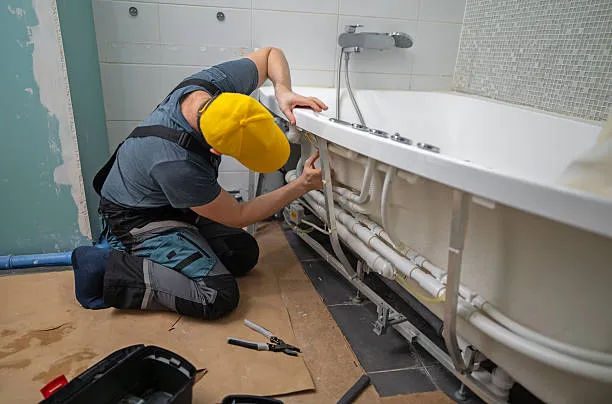
This is the bread and butter of bath installation. Old steel or acrylic bath out, new one in the same position. Same taps, same waste connection. Straightforward if the plumbing is modern and accessible. Most common in post-war semis and 1990s flats across London.
Freestanding Bath Installation
The dream bath for many London homeowners. But it is not just plonking a tub in the middle of the room. The floor must take the weight — a full freestanding bath holds 150 litres of water plus a person. That is 200kg concentrated on four small feet. Floor reinforcement is often needed, especially in older properties with timber floors.
The waste is exposed, so it needs to look good. Chrome click-clack wastes, shallow traps, and precise pipe runs are essential. There is nowhere to hide mistakes behind a panel.
Corner Bath Fitting
Popular in en-suites and small London bathrooms. The panel is usually one piece, so the bath must be manoeuvred into position before any plumbing is connected. In tight spaces, this means removing the bathroom door or even taking the bath through the bedroom. Always measure your access route, not just the bathroom.
Shower Bath Installation
A bath with an overhead shower and glass screen. The screen needs drilling into the wall with solid fixings — no plasterboard anchors. The mixer valve must be pressure-balanced or thermostatic, especially in London flats where pressure fluctuates when neighbours run taps. This is a bath installation and a shower installation combined, and the price reflects that.
Bath Installation in Small Bathrooms
London is full of them. The average London bathroom is under 4 square metres. Fitting a bath in these spaces requires planning. Sometimes the door frame needs temporary removal. Sometimes the bath goes in before the toilet and basin, then they are fitted around it. An experienced local bath fitter knows these tricks. A novice will get stuck halfway through.
How to Choose the Best Bath Fitters Near Me
Here is the truth: the best bath fitters in London are not always the ones with the flashiest website. They are the ones who answer their phone, turn up when they say they will, and leave your bathroom clean.
Check Their Coverage Area Properly
A company advertising “London-wide service” might be based in Watford or Dartford. Ask specifically: “Where are your fitters based?” At Imaa Plumbing, we have teams in North London (covering Islington, Camden, Haringey), South London (Croydon, Bromley, Lambeth), East London (Hackney, Tower Hamlets, Newham), and West London (Ealing, Hounslow, Hillingdon). This matters for same-day service and fair pricing.
Ask About Their Specific Bath Experience
Any plumber can connect a bath. But can they level a freestanding bath on an uneven Victorian floor? Can they route a waste pipe through a concrete screed without damaging underfloor heating? Ask for photos of previous bath installations. A proper fitter has hundreds.
Get a Fixed Price, Not a Day Rate
Day rates for London plumbers range from £250 to £450. A bath replacement should take half a day. If your fitter quotes a day rate, you are paying for their inefficiency. Get a fixed price for the complete job, including removal of the old bath, disposal, fitting, testing, and sealing.
Check Reviews for Bath-Specific Work
General plumbing reviews are fine, but look for mentions of bath fitting specifically. “Fitted our new roll-top bath perfectly” is more relevant than “Fixed our boiler quickly.” Check Google Reviews, Checkatrade, and Trustpilot. Be wary of companies with fifty five-star reviews posted in one week — they are probably fake.
Ask About Waste Disposal
Old baths are bulky. Your council bulky waste collection might take two weeks. A proper bath fitting service includes immediate disposal. We take old baths to licensed waste facilities as standard. If a fitter says “You need to sort the old bath yourself,” add £100 and two weeks of hassle to their quote.
The Bath Installation Process: Step by Step
Knowing what happens helps you judge if your fitter is doing it right.
Step 1: Assessment and Measurements
A proper fitter measures everything before ordering. Bath length, width, height. Waste position from the wall and floor. Tap hole spacing (standard is 180mm, but check). Floor level — use a spirit gauge, not just eyeballing. Access route for removal and delivery.
Step 2: Isolation and Drain Down
The water supply is turned off. The old bath is drained. If the waste goes into a cast iron soil pipe, the fitter needs to be careful — old pipes crack easily. A proper fitter has replacement couplers ready.
Step 3: Removal of Old Bath
Steel baths are heavy. Two people minimum. Acrylic baths are lighter but awkward. The waste trap is disconnected, the taps are removed, and the bath is lifted out. In tight London bathrooms, this often means rotating the bath vertically. Wall tiles at the rim will get damaged — plan for this.
Step 4: Preparation
The floor is cleaned and levelled if needed. The waste pipe is checked — modern baths often need 40mm waste, old ones might have 32mm. The tap positions are confirmed. If you are upgrading to a mixer, the pipework might need modification.
Step 5: New Bath Positioning
The new bath is placed without connections first. Checked for level in both directions. Shims are used under the feet if needed — never just silicone. The waste is test-fitted. The tap positions are marked.
Step 6: Plumbing Connections
Taps are connected. The waste is fitted with a proper trap — bottle traps look neat but can be noisy; P-traps or S-traps are more reliable. The overflow is connected. Everything is hand-tightened, then torqued properly. No cross-threading.
Step 7: Testing
The bath is filled. The taps are run. The waste is released. The fitter checks every joint for leaks. The overflow is tested by filling to the brim. The bath is emptied and refilled — thermal expansion can reveal leaks that appear only after hot water runs through.
Step 8: Sealing and Finishing
Silicone sealant is applied around the bath rim and between the bath and tiles. Not just any silicone — mould-resistant bathroom silicone, applied to a clean, dry surface. The old silicone is completely removed first. The bath panel is fitted if applicable. The area is cleaned. The old bath is taken away.
Common Bath Installation Mistakes London Fitters Make
I have been called to fix other people’s bath installations more times than I can count. Here are the mistakes I see every week:
Silicone over old silicone. The new sealant never bonds properly. It looks fine for a month, then water gets behind it and black mould appears. Always remove old silicone completely with a scraper and solvent.
No support under acrylic baths. An acrylic bath flexes when you get in. Without a proper frame or mortar bed, it cracks within two years. I have replaced three-year-old acrylic baths that should have lasted fifteen.
Wrong waste fall. Bath wastes need a gradient to drain properly. If the pipe runs are too flat, water sits in the trap and smells. This is especially common in London flats where pipe runs are long and convoluted.
Taps not pressure-tested. London water pressure varies wildly. A tap that works fine in a house with a tank might spray everywhere in a flat with mains pressure. Always test with the actual water supply before sealing everything up.
No access panel for the trap. If your bath panel is tiled in, how do you clear a blockage? A proper installation includes a removable panel or a click-clack waste that can be cleared from above.
Expert Tips for a Perfect Bath Installation in London
After fitting thousands of baths, here is what I have learned:
Buy the bath after you have measured the space, not before. That beautiful freestanding bath you saw online might not fit through your bathroom door. Measure the access route — door width, hallway turns, staircase headroom — before you order.
Consider water pressure before choosing taps. Mains pressure in London flats can be 3 bar or more. Tank-fed systems in older houses might be 0.2 bar. High-pressure taps on low-pressure systems dribble. Low-pressure taps on high-pressure systems spray. Match them properly.
Plan for the future. If you are over sixty, consider a bath with a door or at least a low threshold. If you have young children, a shower bath with a screen is more practical than a separate bath and shower. Think five years ahead, not just today.
Get the waste right first time. Moving a waste pipe after the bath is fitted means lifting the bath again. In a concrete floor, that means breaking concrete. Get the waste position confirmed before any other work starts.
Do not forget the extractor fan. A new bath with a shower means more steam. If your bathroom does not have proper ventilation, you will get mould regardless of how good the silicone is. Fit a humidity-sensing extractor if you do not have one.
Bath Installation vs. Full Bathroom Refurbishment: What Do You Actually Need?
Many London homeowners start with “I need a new bath” and end up refurbishing the whole room. Here is how to decide:
| Factor | Bath Replacement Only | Full Bathroom Refurbishment |
|---|---|---|
| Tiles | Bottom row only, or none | All walls and floor |
| Plumbing | Existing positions | New layout, rerouted pipes |
| Electrics | None | New lighting, extractor, possibly underfloor heating |
| Time | Half to one day | 5–10 days |
| Cost | £250 – £900 | £3,500 – £8,000+ |
| Disruption | Minimal, water off for hours | No bathroom for a week+ |
| Best for | Bath is worn, rest is fine | Everything is dated or damaged |
If your tiles are sound, your basin and toilet are modern, and your only issue is the bath, replace just the bath. Do not let a salesman convince you otherwise. At Imaa Plumbing, we will tell you honestly if you need more than a bath replacement. No upselling.
Same-Day Bath Replacement London: When You Need It Now
A cracked bath leaking through the ceiling cannot wait. Neither can a bath that has dropped through the floor because the waste was leaking for months unnoticed.
Same-day bath replacement in London is possible, but it depends on three things:
Your location. Central London and areas with parking restrictions are harder for same-day service. Outer London areas like Croydon, Bromley, Ealing, and Hounslow are easier.
Bath availability. If you need a specific freestanding bath in a specific colour, same-day is impossible. If you are happy with a standard white acrylic bath from our stock, we can often do it.
The problem severity. A leaking tap washer is not an emergency. A bath waste leaking into the flat below is. We prioritise genuine emergencies where water damage is occurring.
Our same-day bath replacement service covers all London postcodes. Call us in the morning, and we aim to have a fitter with you by afternoon. The premium is usually £100–£200 over standard pricing, but it is cheaper than repairing your neighbour’s ceiling.
Freestanding Bath Installation: The London Challenge
Freestanding baths are the most requested upgrade we see. They look stunning in a Victorian terrace or a modern loft conversion. But they are also the most problematic if not fitted properly.
Weight distribution. A 1700mm acrylic freestanding bath weighs 30kg empty. Full of water and a person, it is 250kg. On four small feet, that is 60kg per square centimetre. Victorian timber floors need reinforcement. Concrete floors in flats are usually fine, but check the building regulations for your block.
Exposed plumbing. The taps are either floor-standing or wall-mounted. Floor-standing taps need precise pipe positioning before the bath arrives. Wall-mounted taps need solid wall fixing — not plasterboard. Get the bath and taps chosen before any pipework is modified.
Waste visibility. The waste pipe is visible. It needs to be chrome or white, perfectly straight, and connected to a shallow trap. A P-trap under a freestanding bath looks ugly. A click-clack waste with a shallow bottle trap is the standard solution, but bottle traps can be noisy. We often use a concealed trap with a chrome shroud for the best look and function.
Levelling. Freestanding baths have no rim to hide unevenness. If the floor is not perfectly level, the bath rocks. We use adjustable feet and a laser level, not just a spirit gauge. The difference between “fine” and “perfect” is visible every time you walk into the bathroom.
FAQ: Bath Installation Near Me — Answered
How much does bath installation cost in London?
Standard bath replacement costs £250–£500. Freestanding bath installation is £400–£800. Full bathroom refits including a new bath start at £3,500. Emergency same-day service adds £100–£200. At Imaa Plumbing, we provide fixed-price quotes with no hidden extras.
How long does bath installation take?
A straightforward bath replacement takes 3–5 hours. Freestanding bath installation takes 4–6 hours. Bath installation in a small bathroom with tight access can take a full day. Full bathroom refurbishment takes 5–10 days depending on tiling and electrics.
Do I need a plumber to install a bath?
Legally, no — you can DIY. Practically, yes. Bath installation involves plumbing connections that must be watertight, waste pipes that need proper fall, and silicone sealing that prevents mould. A professional bath fitter guarantees the work and carries insurance if something goes wrong. In London, where water damage can affect multiple flats, insurance matters.
Can you install a bath in a small bathroom?
Yes. We fit baths in London bathrooms under 3 square metres regularly. Corner baths, short baths (1400mm or 1500mm), and shower baths are designed for small spaces. The key is measuring the access route as well as the bathroom itself — the bath must get through the door and around any hallway corners.
What is the difference between bath installation and bathroom installation?
Bath installation is fitting or replacing just the bath. Bathroom installation is the complete room — bath, toilet, basin, tiles, flooring, lighting, and electrics. Bath installation is a single trade job. Bathroom installation needs a plumber, tiler, electrician, and possibly a carpenter.
How do I find reliable bath fitters near me?
Look for local companies with bath-specific reviews, not just general plumbing. Check they cover your area properly — a Croydon-based fitter might not come to Haringey. Ask for photos of previous bath installations. Get a fixed price, not a day rate. Check they include waste disposal. At Imaa Plumbing, we tick every box.
Is a freestanding bath worth it in a London flat?
It depends on your floor structure and bathroom size. Concrete floors in modern flats can usually take the weight. Timber floors in older conversions need checking. You need at least 100mm clearance around the bath for cleaning. If your bathroom is under 3 square metres, a freestanding bath will dominate the space. For larger bathrooms in modern London flats, they are stunning.
Do you offer same-day bath replacement in London?
Yes. We offer same-day bath replacement across all London postcodes for genuine emergencies — cracked baths, leaking wastes, or water damage situations. Call us in the morning, and we aim to have a fitter with you by afternoon. Standard bath replacements are usually booked within 2–3 days.
Conclusion: Get Your Bath Fitted Right the First Time
Bath installation is not complicated, but it is precise. The difference between a bath that lasts fifteen years and one that leaks in six months is attention to detail — proper levelling, correct waste fall, quality silicone, and pressure-tested taps.
If you are searching “bath installation near me” in London, stop guessing and start with a fixed-price quote from a local team that knows your area. At Imaa Plumbing, we have fitted baths in every London borough. We know Victorian soil pipes, concrete floors, timber joists, and the parking restrictions on your street.
Call us today or book online for a free, no-obligation bath installation quote. We will tell you honestly what you need, what it costs, and when we can do it. No upselling, no hidden extras, just proper bath fitting from local London experts.