
Central heating works by using a boiler to heat water, a pump to circulate that hot water through pipes to radiators around your home, and a thermostat to control when the system switches on and off. This single loop — heat, circulate, release, repeat — is what keeps most UK homes warm, and understanding it makes it far easier to spot faults, control costs, and know when to call a heating engineer.
This guide breaks down exactly how a central heating system works, the components involved, the different system types available, and what to do when something goes wrong — with specific guidance for London homes, where older pipework and period properties often add extra complexity.
What Is Central Heating?
Central heating is a system that generates heat in one place — usually a boiler — and distributes it throughout a building via pipes, radiators, or underfloor pipework. Unlike a single room heater, it warms an entire home from one central heat source.
Most UK homes use a wet central heating system, where a boiler heats water that circulates through radiators. Some newer or off-grid properties use electric central heating, where heat is generated locally at each radiator or storage heater without a boiler or circulating water. Around 85% of UK homes are connected to mains gas and use gas central heating, according to Ofgem, though heat pumps and electric alternatives are becoming more common as the UK moves toward lower-carbon heating.
How Does Central Heating Work? The Full Process
Central heating works through a repeating four-step cycle: the boiler heats water, a pump circulates it, radiators release the heat into each room, and a thermostat tells the system when to start and stop.
Step 1: The Boiler Heats the Water
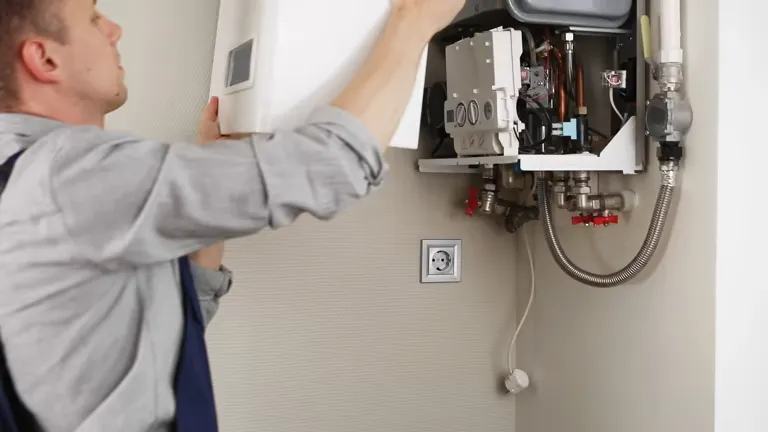
The boiler burns gas (or uses electricity, in electric systems) to heat water inside a heat exchanger. In a combi boiler, this water is heated on demand, directly from the mains, with no storage tank required. In a system boiler or conventional boiler, water is heated and stored in a cylinder ready for use.
Step 2: The Pump Circulates the Water
A central heating pump, usually built into the boiler itself, pushes the heated water through a network of pipes to every radiator connected to the system. Without the pump, water would rely on natural convection alone, which is far too slow to heat a modern home efficiently.
Step 3: Radiators Release Heat Into the Room
Hot water enters each radiator, warms the metal, and that metal radiates heat into the room through a mix of radiation and convection. As the water cools slightly, it flows back through the return pipe to the boiler to be reheated, completing the loop.
Step 4: The Thermostat and Controls Manage the System
A central heating thermostat measures room temperature and signals the boiler to fire up when it drops below your set point, then switches it off once the target is reached. Programmers and smart controls add scheduling on top of this, so the system only runs when you actually need heat.
This cycle repeats continuously while the heating is switched on, constantly adjusting to maintain your set temperature.
Key Components of a Central Heating System
A central heating system relies on six core components working together: the boiler, pump, radiators, thermostat, thermostatic radiator valves, and the expansion vessel.
| Component | Function |
|---|---|
| Boiler | Heats the water using gas, oil, or electricity |
| Pump | Circulates hot water through the pipework |
| Radiators | Release heat into each room |
| Thermostat | Controls when the boiler switches on and off |
| Thermostatic radiator valves (TRVs) | Control temperature room by room |
| Expansion vessel | Absorbs pressure changes as water heats and expands |
| Cylinder (system/conventional only) | Stores hot water for use throughout the day |
| Programmer | Schedules heating and hot water times |
How Thermostatic Radiator Valves Work
Thermostatic radiator valves (TRVs) sit on individual radiators and adjust how much hot water flows into that radiator based on the room’s temperature. This lets you keep a bedroom cooler than a living room, for example, without changing the temperature for the whole house. TRVs are numbered rather than marked in exact degrees, but higher numbers generally correspond to roughly 2–3°C increases per setting.
Types of Central Heating Systems
There are three main types of central heating system in the UK: combi, system, and conventional (also called regular or heat-only) boilers. The right one depends on your home’s size, number of bathrooms, and hot water demand.
| System Type | How It Works | Best For |
|---|---|---|
| Combi boiler | Heats water on demand directly from the mains, no tank needed | Flats and smaller homes with one bathroom |
| System boiler | Heats water and stores it in a cylinder, but most components are built into the boiler | Homes with two or more bathrooms and higher hot water demand |
| Conventional (regular) boiler | Uses a separate cold water tank (often in the loft) and a hot water cylinder | Older properties already fitted with this setup, or homes with low water pressure |
Gas central heating remains the most common setup across London, but electric central heating is a practical option for properties without a mains gas connection, and heat pumps are increasingly used as a lower-carbon alternative in new installations.
How Long Does Central Heating Take to Heat Up?
Most central heating systems take between 15 and 30 minutes to noticeably warm a room, and around an hour to bring an entire house up to a comfortable temperature from cold. The exact time depends on:
- Boiler output (kW) — higher output heats water faster
- Radiator size and number — undersized radiators heat rooms more slowly
- Insulation quality — poorly insulated homes lose heat faster than they gain it
- System type — combi boilers typically respond faster than systems relying on a stored cylinder
- Sludge or air in the system — trapped air or built-up sludge slows circulation and heat transfer
If your home is taking noticeably longer to heat up than it used to, that’s often an early sign of a fault rather than something to just live with.
Common Central Heating Problems and What They Mean
Most central heating faults fall into a handful of recognisable patterns, and knowing what each one usually means helps you decide whether it’s a quick fix or a job for a professional.
Why Are My Radiators Not Heating Properly?
- Cold at the top, warm at the bottom — trapped air; usually fixed by bleeding the radiator
- Cold at the bottom, warm at the top — sludge or debris build-up; often needs a power flush
- Cold in patches — internal corrosion or debris blocking flow within the radiator itself
- One radiator cold, others working — closed or faulty TRV, or a blockage in that specific pipe run
Why Is My Central Heating Not Working At All?
- Thermostat set incorrectly or has a flat battery — check settings and batteries first
- Low boiler pressure — most boilers need pressure between 1 and 1.5 bar; below this, the system may not run
- Pilot light out (older boilers) — usually a simple relight, but repeated outages suggest a fault
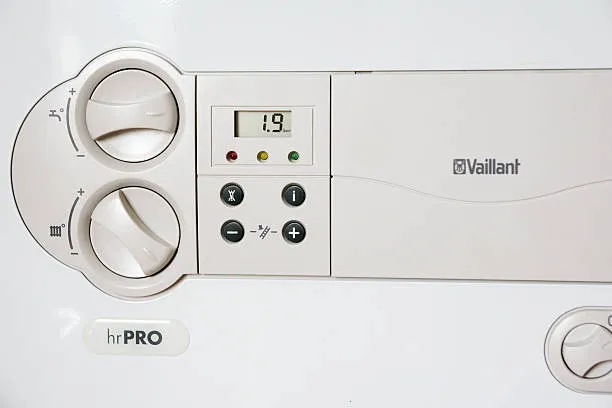
- Boiler showing a fault code — modern boilers display an error code; note it before calling an engineer, as it speeds up diagnosis
- Frozen condensate pipe — common in winter, causes the boiler to lock out and stop working
If you smell gas at any point, leave the property immediately, avoid switches or naked flames, and call the National Gas Emergency Service on 0800 111 999 before doing anything else.
How to Make Central Heating More Efficient
You can improve central heating efficiency without replacing the whole system by combining a few low-cost changes with proper annual maintenance.
- Bleed radiators every autumn to remove trapped air before the heating season starts
- Fit thermostatic radiator valves to unused or low-use rooms so you’re not heating empty spaces
- Book an annual boiler service to catch efficiency losses and faults early
- Power flush older systems if radiators are heating unevenly, since sludge build-up forces the boiler to work harder
- Use a programmer or smart thermostat to avoid heating the home when nobody’s in
- Bring older boilers up to A-rated efficiency — a boiler over 10–15 years old is often 15–20% less efficient than a modern condensing model, according to the Energy Saving Trust
Central Heating in London Homes: What’s Different
London’s mix of period conversions, Victorian terraces, and modern flats means central heating systems here often face different challenges than the national average. Older properties frequently still run on conventional boilers with loft-mounted tanks, while flats and new builds are almost always fitted with combi systems due to space constraints.
Common London-specific issues include:
- Narrow or shared flues in converted properties, which can limit boiler placement options
- Leasehold restrictions on external flue positioning or noise from certain boiler models
- Older pipework in Victorian and Edwardian homes, which is more prone to sludge build-up over time
- Hard water in parts of London, which increases limescale build-up inside boilers and pipework faster than in soft-water areas
If your system is showing signs of inefficiency or your boiler is nearing the end of its lifespan, a local central heating engineer in London can assess whether a repair, power flush, or full boiler installation is the better long-term fix for your specific property type.
Frequently Asked Questions
What is central heating? Central heating is a system that heats an entire building from one central source — usually a boiler — distributing that heat through radiators, pipes, or underfloor systems rather than heating each room separately.
How does central heating heat a house? A boiler heats water, a pump circulates it through pipes to radiators in each room, and the radiators release that heat into the space. A thermostat controls when this cycle starts and stops.
How does a boiler heat radiators? The boiler heats water inside a heat exchanger, and a pump pushes that hot water through pipework to each radiator, where it transfers heat into the room before returning to the boiler to be reheated.
Does central heating use gas? Most UK central heating systems use gas, but electric central heating and heat pump systems are also available, particularly for homes without a mains gas connection.
How long does central heating take to heat up? Most systems noticeably warm a room within 15 to 30 minutes and heat a full house within about an hour, depending on boiler output, insulation, and radiator size.
Why is my central heating not working? Common causes include low boiler pressure, thermostat issues, a frozen condensate pipe, or a fault the boiler is displaying as an error code. Checking pressure and thermostat settings first can rule out the simplest causes.
Why are my radiators not heating evenly? Cold spots usually mean trapped air (if cold at the top) or sludge build-up (if cold at the bottom). Bleeding fixes trapped air; persistent unevenness usually needs a power flush.
How can I make my central heating more efficient? Bleed radiators annually, book a yearly boiler service, use TRVs and a programmer to avoid heating unused rooms, and consider a power flush if radiators heat unevenly.
What’s the difference between a combi and a system boiler? A combi boiler heats water on demand with no storage tank, ideal for smaller homes. A system boiler stores hot water in a cylinder, better suited to homes with higher hot water demand across multiple bathrooms.
Do I need a professional to fix central heating problems? Simple tasks like bleeding a radiator or checking thermostat settings are safe to do yourself. Anything involving the boiler itself, gas supply, or persistent faults should always go to a Gas Safe registered engineer.
Final Thoughts: Understanding Your Central Heating System
Central heating is a straightforward loop once you break it down: the boiler heats, the pump circulates, the radiators release, and the thermostat controls the whole cycle. Knowing how these parts work together makes it much easier to spot early warning signs — uneven heating, slow warm-up times, or pressure drops — before they turn into a full breakdown.
If your system isn’t performing the way it should, a professional assessment can confirm whether it needs a simple fix, a power flush, or a full upgrade. Get in touch with a Gas Safe registered heating engineer in London for a free, no-obligation quote.