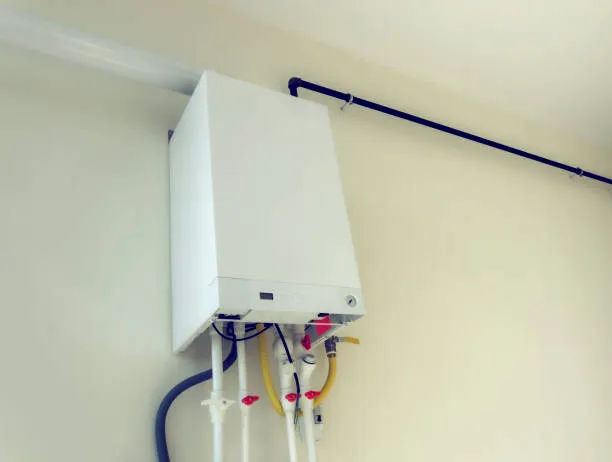
The most efficient combi boilers for London homes are modern A-rated condensing models at about 94% ErP seasonal efficiency. Strong shortlist options are the Worcester Bosch Greenstar 4000, Viessmann Vitodens 100-W and Vaillant ecoTEC plus. The best one for you depends on your cupboard size, hot-water demand, mains water and installer, because efficiency labels are very close between leading brands.
This guide covers what to look for in a London flat or terrace, what a replacement costs here, whether you need permission for the flue, and how to check your installer.
What Is the Most Efficient Combi Boiler for a London Home?
It is the boiler that pairs about 94% seasonal efficiency with the right output, good controls and a careful installation. On paper, leading models are close. In daily use, your home matters more.
Two rules apply to every London replacement:
- All modern combis are condensing. All modern combi boilers have to be condensing.
- England sets a legal floor. Since 6 April 2018, replacement boilers in existing English homes must reach at least 92% seasonal efficiency, with time and temperature controls, and combis need one extra energy-saving measure. London falls under these rules.
So you are choosing between good and very good boilers. Think about fit before percentages.
Most Efficient Combi Boilers Compared for London Homes
Check physical size first. Many London boilers go into a kitchen cupboard, and a few centimetres can decide the model. Figures below come from manufacturer and retailer pages, so confirm the exact model on the current datasheet before you order.
| Model | Seasonal efficiency (ErP) | Hot-water flow | Size (H×W×D) | Warranty (reported) |
|---|---|---|---|---|
| Worcester Bosch Greenstar 4000 | 94% | 10.5 l/min (25kW); 12.3 l/min (30kW) | Check datasheet | 10 years via one installer |
| Viessmann Vitodens 100-W | 94% (one review); up to 98% “standard efficiency” | 12 l/min (30kW) | 700×400×360 mm | 5 years, extendable if fitted by a trained installer |
| Vaillant ecoTEC plus | 94% | About 13 l/min (832); 15.9 l/min (835) | 720×440×338 mm (832) | 10 years if registered and fitted with a protection kit |
London notes:
- The Vitodens 100-W is slimmer than the ecoTEC plus 832, which one reviewer called not the most compact for kitchen cupboards.
- Vaillant’s ecoTEC plus range holds Quiet Mark accreditation, useful in flats with thin walls.
- For a smaller home, the Greenstar 2000 is suited to apartments and small-to-medium homes with a 1:10 modulation range.
- Also compare the Ideal Logic Max and Baxi 800 ranges on the same terms.
Why do some pages say 94% and others 98%?
They are different measurements. The ErP figure of about 94% is a seasonal rating. A “98%” figure is usually a best-case “standard efficiency” number. Compare every boiler using ErP seasonal efficiency, and treat mixed listings with caution.
What Makes a Combi Boiler Energy Efficient?
Condensing technology, modulation, good controls and a low flow temperature.
- Condensing. The boiler recovers heat from exhaust gases. Nesta reports that boilers condense more when returning water is below 54°C.
- Modulation. A wide range lets the flame turn down instead of cycling on and off. Models range from up to 1:6 to 1:10.
- Controls. The extra Boiler Plus measure can be weather compensation, load compensation, flue gas heat recovery, or smart controls. Ask which your installer proposes.
- A-rating. A-rated boilers are 90% or more efficient, and G-rated are under 70%. Almost all new boilers are A-rated, so the percentage matters more than the letter.
How Much Will an Efficient Boiler Save a London Household?
It depends mainly on what you replace. Swapping an old boiler saves a lot. Swapping 92% for 94% saves very little.
From October to December 2026, the gas price cap averages 7.97p per kWh, with a 29.68p daily standing charge. Regional rates vary a little, so check your own tariff.
Here is an illustrative example for a home needing 8,000 kWh of useful heat a year, ignoring the standing charge:
| Boiler efficiency | Gas used | Annual gas cost at 7.97p |
|---|---|---|
| 70% (old boiler) | 11,429 kWh | about £911 |
| 92% (legal minimum) | 8,696 kWh | about £693 |
| 94% (leading models) | 8,511 kWh | about £678 |
Moving from 70% to 94% saves about £230 a year here. Moving from 92% to 94% saves about £15. Real homes differ, and boilers rarely hit label efficiency every day. An older Energy Saving Trust estimate puts a G-to-A upgrade at around £260 a year for a detached house. Treat these as guides, not promises.
Which Combi Boiler Suits Your Type of London Home?
Match the boiler to your hot-water use and space, not only to bedrooms.
| London home | Typical priorities | What to check |
|---|---|---|
| Studio or 1-bed flat | Compact size, lower output, quiet running | Cupboard size, flue route, lease terms |
| 2-bed flat | Mid output, good hot-water flow | Mains pressure, neighbour noise |
| Victorian or Edwardian terrace | Efficiency with older radiators and pipework | System condition, flue route, conservation rules |
| 3-bed house, 1 to 2 bathrooms | 25 to 30kW range | One review says the Vaillant 832 suits up to 3 bedrooms with 2 bathrooms and one shower. |
| Large home, 2+ bathrooms used together | High flow rate, or consider a system boiler | Mains flow rate |
What should flat owners check?
- Space. Measure the cupboard against the boiler dimensions above.
- Flue route. Many flats have a fixed route to an outside wall, which limits choice.
- Your lease. Check whether you need the freeholder’s consent for gas work or flue changes.
- Noise. Look for quieter models if walls are thin.
What should terrace owners check?
- Pipework and radiators. Older systems may need a flush, a magnetic filter or some radiator work.
- Flue position. Moving the boiler to a new wall can add cost and permissions.
- Mains flow. A combi needs good mains pressure and flow. Ask the installer to measure both.
When might a combi not suit you?
A combi may not suit a large family using several showers at once. A system boiler with a cylinder may work better. An engineer should assess this, ideally with a heat-loss calculation.
How Does London’s Hard Water Affect a Combi Boiler?
London’s hard water can cause limescale inside the boiler over time, so plan for scale protection and servicing. Thames Water says all water in its area is hard because it runs through chalk and limestone. One industry study reports that London and the South East are limescale hotspots, with hardness above 200 ppm.
What to do:
- Ask your installer what scale protection they recommend.
- Keep up annual servicing.
- Remember that a water filter is not the same as a softener.
Do You Need Permission to Change a Boiler Flue in London?
For a like-for-like swap, often not, but moving a flue or working on a listed or conservation-area building may need consent. Check with your council and your lease before work starts.
Council records show why this matters. In Camden, a retrospective application for a flat’s boiler and flue noted that the owner was not aware of the requirement for Listed Building Consent. Other records show flue relocations in conservation areas going through planning applications.
Simple checklist:
- Is the building listed? If so, ask the council before changing the flue.
- Is it in a conservation area? Ask before moving or adding a flue on a visible wall.
- Is it a leasehold flat? Read your lease and tell the freeholder if needed.
- Is the flue staying put? A same-place swap is usually simpler, but still confirm.
This is general guidance, not legal advice. Your council planning team has the final word.
How Much Does a Combi Boiler Replacement Cost in London?
For a like-for-like swap, expect roughly £2,000 to £3,600 in London, though quotes vary. One 2026 guide puts London and South East combi swaps at £2,000 to £3,600, against £1,800 to £3,000 elsewhere. Another says London labour can add £300 to £800 compared with northern regions. A national installer’s median quote for a standard combi replacement was £2,300 across 2,000 quotes.
These are guides from different sources, not a fixed price list. Get itemised quotes for your property.
What pushes a London quote up or down?
- Boiler model and output
- Moving the boiler to a new position
- Flue length and route
- Pipework or gas supply changes
- System flush, magnetic filter and controls
- Radiator replacements
- Warranty level
What should a written quote include?
- Exact boiler make, model and kW
- Flue, pipework and fittings
- Controls and the Boiler Plus measure
- System flush and filter
- Commissioning and handover paperwork
- Warranty length and conditions
How to Get More Efficiency From Your Boiler
Lower your flow temperature if you have a condensing combi. Nesta suggests 60°C in winter, and lower in warmer months. Energy Saving Trust, citing Nesta, says it can improve efficiency by nearly 4%. One test saw heat-up times rise from 23 to 37 minutes going from 80°C to 60°C.
Steps:
- Check your manual for the flow temperature control.
- Try 60°C in cold weather and lower in mild spells.
- Raise it if rooms stay cold.
- Add a programmer, room thermostat and TRVs.
- Balance radiators and service the boiler yearly.
If you are unsure, ask a Gas Safe engineer.
How to Choose a Gas Safe Installer in London
Pick a Gas Safe registered engineer who measures your home first.
- Check the Gas Safe ID card and verify it on the official register.
- Ask how they chose the output (heat loss, hot-water use, mains flow).
- Ask which Boiler Plus measure they will fit.
- Read warranty conditions, such as registration and servicing.
- Ask for commissioning documents and a controls handover.
- Ask for photos or references of similar London jobs, such as a flat or a Victorian terrace.
Common Mistakes London Homeowners Make
- Comparing 94% and 98% listings as if they used the same measure
- Ordering a boiler that does not fit the cupboard
- Ignoring mains pressure and flow
- Skipping the lease or council check when moving a flue
- Forgetting scale protection in a hard-water area
- Choosing on price without reading warranty terms
Frequently Asked Questions
1. What is the most efficient combi boiler for a London home?
Leading A-rated condensing models sit around 94% ErP seasonal efficiency. Shortlist the Greenstar 4000, Vitodens 100-W and ecoTEC plus, then match size and hot-water flow to your home.
2. Which combi boiler is best for a small London flat?
Choose a compact, quiet model with a lower output and a wide modulation range. Measure your cupboard against the boiler’s dimensions first.
3. How much does a combi boiler replacement cost in London?
Roughly £2,000 to £3,600 for a like-for-like swap, according to one 2026 guide. Moving the boiler or changing the flue adds cost.
4. Do I need permission to change my flue in London?
Not always, but listed buildings and conservation areas may need consent, and leasehold flats may need the freeholder’s agreement. Check with your council and lease.
5. Does London’s hard water damage combi boilers?
It can cause limescale over time. Ask about scale protection and keep up annual servicing.
6. Does a 94% boiler save much more than a 92% one?
Only slightly. In the example above, about £15 a year. Boiler age, controls and settings matter more.
7. What flow temperature should I use?
About 60°C in winter for a condensing combi, lower in mild weather. Raise it if rooms stay cold.
8. Is a combi right for a Victorian terrace?
Often yes, if mains flow suits and the system is in good condition. Large households with several bathrooms may prefer a system boiler.
9. What does Boiler Plus mean for me?
Replacement boilers in England need 92% ErP efficiency, time and temperature controls, and for combis one extra energy-saving measure.
10. How do I check my installer is legitimate?
Ask to see their Gas Safe ID and verify it on the Gas Safe Register.
Ready to Find the Right Boiler for Your London Home?
Choosing well means matching output, space and controls to your property. Compare combi boiler packages or request a combi boiler replacement quote in London based on your home’s actual requirements.